If you own a Jeep Wrangler JK, keeping your engine cool is crucial to avoid costly repairs and keep your ride running smoothly. But how do you add coolant the right way without making a mess or causing damage?
In this guide, you’ll learn simple, step-by-step instructions to add coolant safely and effectively. Whether you’re new to car maintenance or just want to refresh your skills, this article will help you take care of your Jeep like a pro.
Keep reading to ensure your Wrangler stays ready for every adventure ahead.
Why Coolant Matters For Your Jeep Wrangler Jk
Coolant plays a key role in keeping your Jeep Wrangler JK running smoothly. It helps control the engine temperature and prevents overheating. Without the right amount of coolant, your engine can get damaged quickly.
Using the correct coolant protects the engine parts from rust and corrosion. It also stops the coolant from freezing in cold weather and boiling in hot weather. This balance is vital for all seasons.
Prevents Engine Overheating
Coolant absorbs heat from the engine. It moves this heat away to the radiator. The radiator then cools the fluid before it returns to the engine. This cycle stops the engine from getting too hot.
Protects Against Freezing
In cold weather, water alone can freeze and damage the engine. Coolant lowers the freezing point of the liquid inside the cooling system. This keeps the fluid liquid, even in freezing temperatures.
Stops Rust And Corrosion
Coolant contains additives that prevent rust inside the engine. Rust can clog the cooling system and cause leaks. Proper coolant keeps your Jeep’s system clean and efficient.
Extends Engine Life
Coolant helps your engine run at the right temperature. This reduces wear and tear on engine parts. A well-maintained cooling system helps your Jeep last longer.
Choosing The Right Coolant
Choosing the right coolant for your Jeep Wrangler JK is important. The coolant protects your engine from overheating and freezing. It also prevents rust and corrosion inside the cooling system. Using the correct coolant keeps your Jeep running smoothly and extends the engine’s life.
Types Of Coolant Suitable For Jeep Wrangler Jk
The Jeep Wrangler JK usually needs a specific type of coolant. Most models use HOAT coolant, which stands for Hybrid Organic Acid Technology. This coolant has a mix of organic acids and silicates. It offers good protection against rust and heat.
Some Jeep Wranglers may also use OAT coolant, which is Organic Acid Technology. This coolant lasts longer but does not contain silicates. Always check your owner’s manual for the exact type recommended for your Jeep.
Checking Coolant Compatibility
Mixing different types of coolant can cause damage. Some coolants react badly when combined. This can lead to sludge buildup and clog your cooling system. Always check the label on the coolant bottle before adding it.
Use only coolants approved for Jeep Wrangler JK. If you are unsure, remove the old coolant fully before adding a new type. This step helps avoid any chemical reactions inside the engine. Proper compatibility ensures your Jeep stays protected.
When To Add Coolant
Knowing when to add coolant to your Jeep Wrangler JK is key to keeping the engine safe. Coolant helps keep the engine from overheating. Adding coolant at the right time prevents costly repairs and keeps your Jeep running smoothly.
Coolant levels can drop slowly or quickly. Watch for signs that your Jeep needs more coolant. Regular checks help catch problems early. Stay ahead of issues by knowing what to look for and how often to check.
Signs Of Low Coolant Levels
Look for the temperature gauge rising above normal. A hot engine warning light may come on. Steam or a sweet smell near the engine shows coolant leaks. Your Jeep might overheat or run rough. These are clear signs to add coolant soon.
Routine Coolant Checks
Check coolant levels at least every month. Do this when the engine is cold for an accurate reading. Open the hood and find the coolant reservoir. The level should be between the minimum and maximum marks. Add coolant if it is below the minimum line.
Credit: www.jeeps.net
Preparing Your Jeep For Coolant Addition
Start by parking your Jeep Wrangler JK on a flat surface and turning off the engine. Let the engine cool down completely to avoid burns. Check the coolant reservoir and remove the cap carefully before adding coolant.
Safety Precautions
Start by making sure the engine is cool. Never open the radiator cap when the engine is hot. Hot coolant can cause serious burns. Wear gloves to protect your hands from spills. Use safety glasses to guard your eyes. Work in a well-ventilated area to avoid inhaling fumes. Keep children and pets away from the workspace.
Gathering Necessary Tools And Supplies
Collect all tools before starting. You will need a funnel to pour coolant without spills. Have a clean rag ready for wiping any drips. Use the correct type of coolant for your Jeep Wrangler JK. Check your owner’s manual for the recommended coolant type. Also, have a container to catch any old coolant if you plan to drain it. Keep everything within reach for smooth workflow.
Locating The Coolant Reservoir
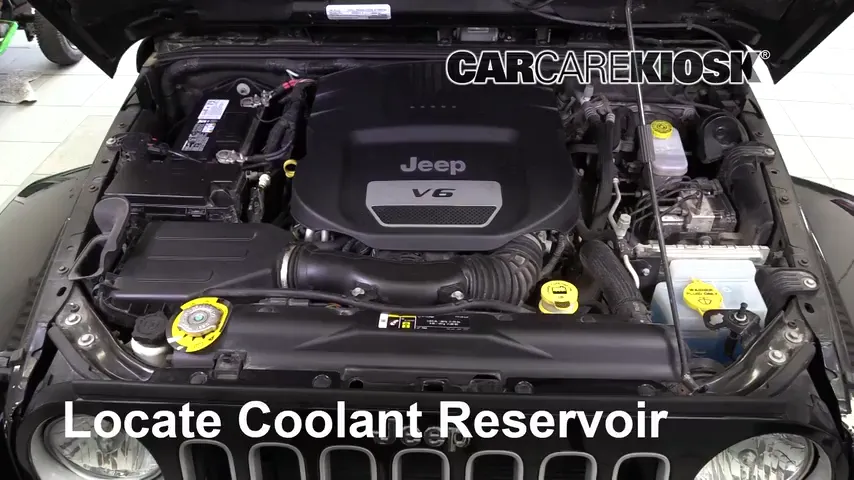
Locating the coolant reservoir in your Jeep Wrangler JK is an important first step before adding coolant. The reservoir holds the extra coolant that keeps your engine from overheating. Knowing its exact spot saves time and avoids mistakes.
The coolant reservoir is usually easy to find under the hood. It is a translucent plastic tank with a cap on top. The tank has markings showing minimum and maximum levels for the coolant inside.
Open The Hood Of Your Jeep Wrangler Jk
Start by pulling the hood release lever inside the vehicle. It is located near the driver’s side footwell. After releasing, go to the front of the Jeep and lift the hood fully. Secure it with the prop rod if needed.
Spot The Coolant Reservoir Tank
Look for a small plastic tank near the engine. The coolant reservoir is often on the passenger side. It is clear or white with a colored cap. The cap might be green, yellow, or black.
Check For Coolant Level Markings
The reservoir has “MIN” and “MAX” lines on its side. These lines show how much coolant should be inside. You can see the coolant level without opening the cap. This helps avoid spills and keeps the system sealed.
Step-by-step Guide To Adding Coolant
Adding coolant to your Jeep Wrangler JK is a simple task. It helps keep the engine cool and prevents overheating. This guide breaks down the process into easy steps. Follow these instructions to add coolant safely and correctly.
Checking Coolant Level
Start by locating the coolant reservoir. It is usually a translucent tank near the engine. Look for the “Full” and “Low” marks on the side. Check the coolant level without opening the cap. If the coolant is below the “Low” mark, you need to add more.
Removing The Reservoir Cap Safely
Make sure the engine is cold before opening the cap. Hot coolant can cause burns. Slowly turn the cap counterclockwise to release pressure. If you hear a hissing sound, wait until it stops. Remove the cap completely once the pressure is gone.
Pouring Coolant Correctly
Use the recommended coolant type for your Jeep. Pour the coolant slowly into the reservoir. Fill it until the level reaches the “Full” mark. Avoid overfilling, as this can cause leaks. Use a funnel to prevent spills.
Replacing The Cap And Securing It
Place the cap back on the reservoir. Turn it clockwise until it is tight. Do not force it; just make sure it is secure. Check for any leaks around the cap. Start the engine and watch the temperature gauge to confirm proper cooling.
After Adding Coolant
After adding coolant to your Jeep Wrangler JK, some important steps follow. These steps help ensure the coolant works well and your engine stays safe. The engine needs time to spread the coolant through the system. Then, you must check for any leaks. Finally, keep an eye on coolant levels over time.
Running The Engine To Circulate Coolant
Start your Jeep and let the engine run. Keep the hood open to watch the coolant level. The engine’s warmth helps the coolant move through pipes and the radiator. This process removes any air pockets trapped inside. Air pockets can cause the engine to overheat. Run the engine for about 10 to 15 minutes. Stop the engine and check the coolant level again. Add more coolant if the level drops.
Checking For Leaks
Look under the Jeep for puddles or wet spots. Check around the radiator and hoses for drips. A leak can lower coolant levels quickly. It can cause the engine to overheat. Tighten any loose clamps or replace damaged hoses. If you find a big leak, get it fixed before driving more.
Monitoring Coolant Levels Over Time
Coolant levels can change as the engine runs. Check the coolant reservoir once a week for a few weeks. Make sure the level stays between the minimum and maximum marks. If it drops often, there may be a leak or other issue. Keep an eye on engine temperature too. Regular checks help avoid costly repairs later.
Credit: www.carcarekiosk.com
Common Mistakes To Avoid
Adding coolant to your Jeep Wrangler JK is simple but must be done right. Avoiding common mistakes helps keep your engine safe. Mistakes can cause leaks, overheating, or damage to parts. This section points out what to avoid during the process.
Not Checking The Coolant Type
Using the wrong coolant can harm your Jeep’s engine. Always check the owner’s manual for the right type. Mixing different coolants can cause clogs and corrosion inside the system.
Filling When The Engine Is Hot
Opening the coolant reservoir when the engine is hot can cause burns. Wait until the engine cools down. Pressure builds up in the system and hot coolant may spray out.
Overfilling The Coolant Reservoir
Too much coolant can cause leaks and pressure problems. Fill only to the “full” line on the reservoir. Overfilling does not improve cooling and can cause damage.
Not Inspecting For Leaks First
Adding coolant without checking for leaks wastes time. Look under the Jeep for puddles or wet spots. Fix leaks before refilling to avoid losing coolant again.
Ignoring Safety Gear
Coolant is toxic and can hurt your skin or eyes. Wear gloves and goggles during the refill. Keep coolant away from children and pets.

Credit: www.youtube.com
Frequently Asked Questions
How Often Should I Add Coolant To Jeep Wrangler Jk?
You should check the coolant level every 6 months. Add coolant if the level is below the minimum mark. Regular checks prevent engine overheating and maintain optimal performance.
What Type Of Coolant Is Best For Jeep Wrangler Jk?
Use a 50/50 mix of ethylene glycol-based antifreeze and distilled water. Always refer to the owner’s manual for the recommended coolant type to avoid damage.
Can I Add Coolant When The Engine Is Hot?
No, never add coolant when the engine is hot. Wait until the engine cools down completely to avoid burns and pressure-related accidents.
Where Is The Coolant Reservoir Located In Jeep Wrangler Jk?
The coolant reservoir is usually a translucent plastic tank near the radiator. It has markings for minimum and maximum coolant levels for easy checking.
Conclusion
Adding coolant to your Jeep Wrangler JK keeps the engine cool and running well. Check the coolant level often to avoid overheating. Use the right type of coolant for your Jeep model. Never open the radiator cap when the engine is hot.
Follow safety steps to protect yourself and your vehicle. Regular maintenance helps your Jeep last longer and perform better. Simple care like this saves time and money on repairs. Stay safe and enjoy your Jeep adventures with confidence.